Solidity Gas Optimization Tips
This article explores various techniques to reduce gas consumption in your Solidity smart contracts.

Simple Note-Taking API in Hono
Gas Optimizing Techniques
1. Pre-Increment
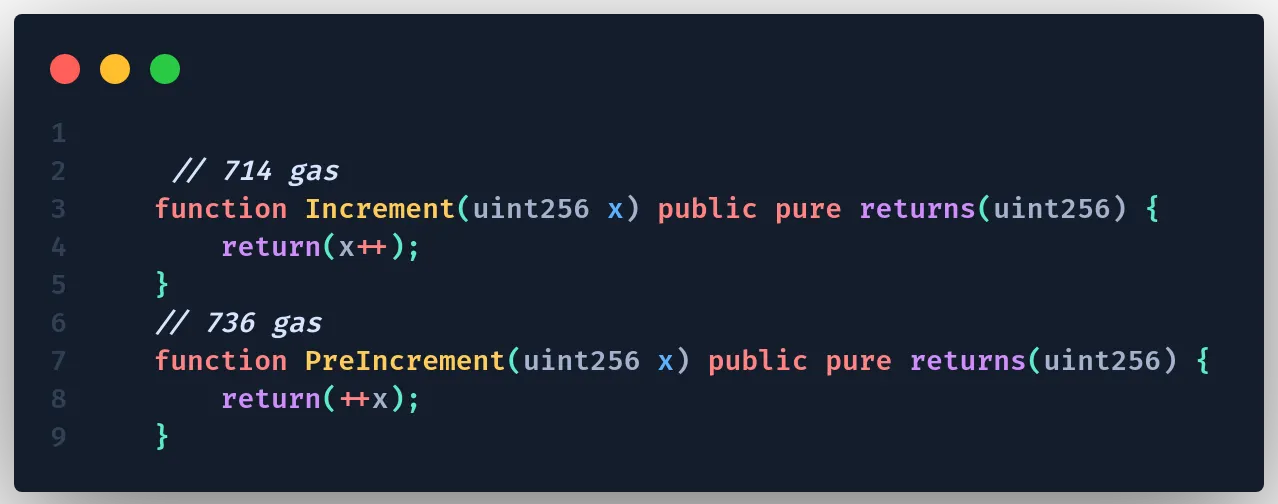
Pre-increment is more gas-efficient than Increment because it uses the pre-increment operator, which saves on gas compared to the post-increment operator used in Increment. When optimizing for gas usage, it is recommended to use the pre-increment operator whenever possible.
2. Storing data inside calldata
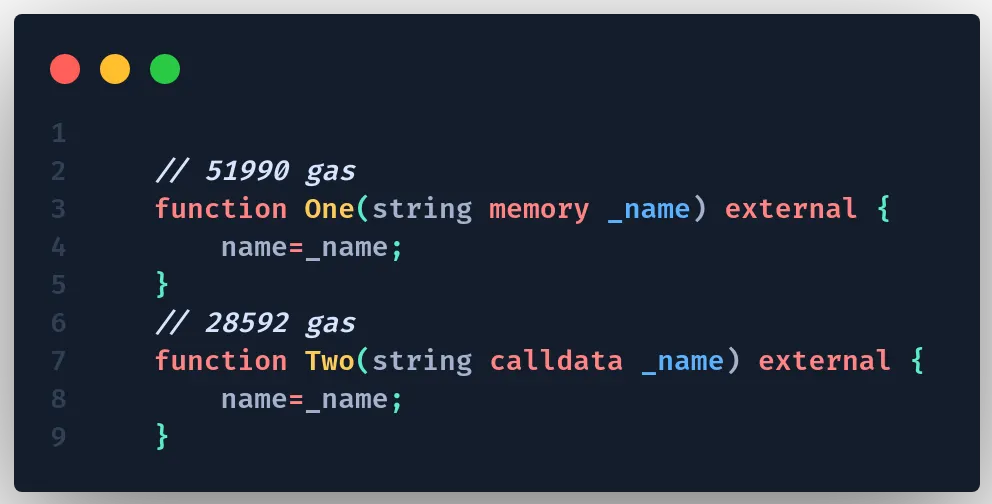
One key difference is that calldata arguments are immutable, meaning they
cannot be modified within the function. The calldata storage type is more
gas-efficient than memory, making it useful for optimizing the gas cost of a
contract.
3. Uint8 (without Storage packing)
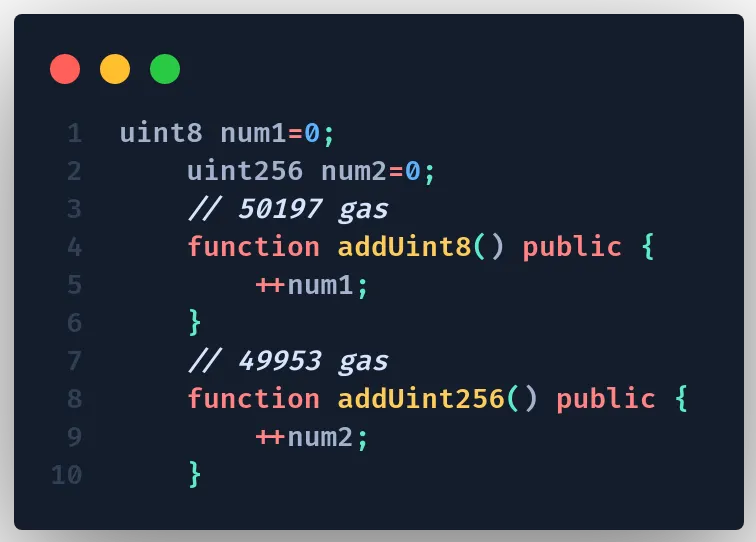
The gas cost for the uint8 function is slightly higher than the uint256
function, making uint256 more gas-efficient for incrementing variables.
4. Cache the array length
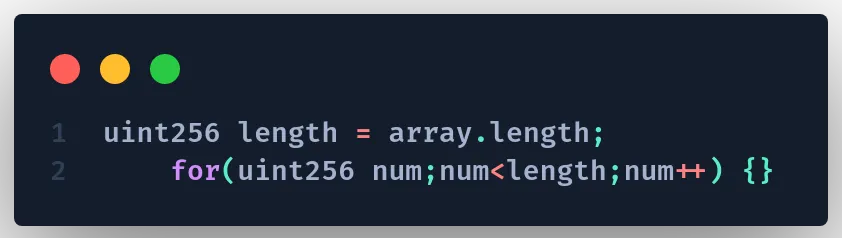
By assigning the length to a separate variable outside of the loop, the gas cost of the loop can be significantly reduced, as the length only needs to be calculated once.
5. < operator instead of <=
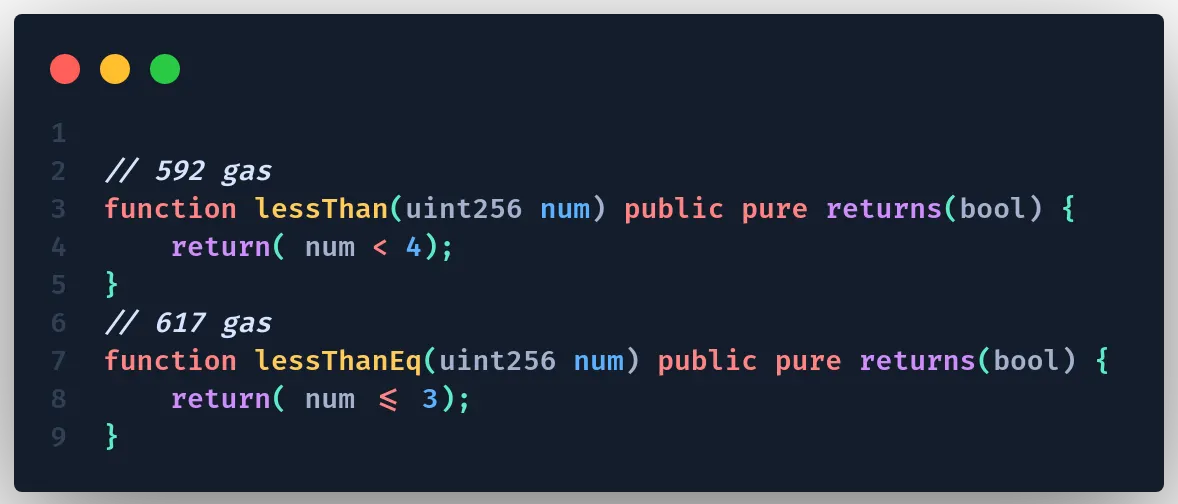
In the given example, the lessThan function uses only one opcode, LT, to
check if the given number is less than 4, while the lessThanEq function uses
two opcodes, GT and ISZERO, to check if the given number is greater than 3.
Therefore, lessThan is more gas-efficient than lessThanEq.
6. Exponentiation operator
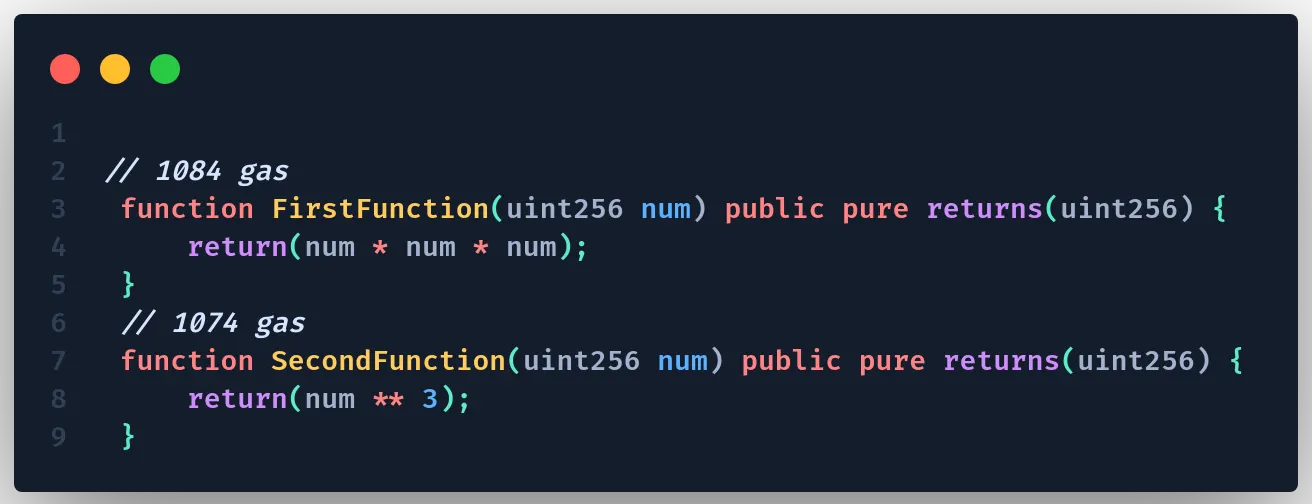
Exponentiation operator requires less computational steps to raise a number to a power compared to multiplication. As a result, it uses less gas and reduces the transaction cost. This optimization increases the efficiency of the contract execution and can result in cost savings for the users.
This is my first attempt at writing about gas optimization in Solidity contracts, so please forgive any mistakes.